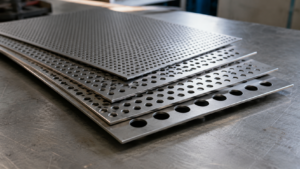
Choosing between a Perforated Metal Plate and a Perforated Sheet is an important decision for any industrial, commercial, or architectural project. While both products feature precision-punched holes that improve airflow, filtration, drainage, and appearance, they are designed for different purposes. Selecting the wrong material can increase costs, reduce durability, or affect the overall performance of your project.
Whether you are designing machine guards, building facades, filtration systems, walkways, or ventilation panels, understanding the differences between a Perforated Metal Plate and a Perforated Sheet will help you make the right choice. In this guide, we explain their key differences, common applications, materials, and practical selection tips so you can confidently choose the best option.
What Is a Perforated Metal Plate?
A Perforated Metal Plate is a thick metal plate that has been punched with a pattern of holes, slots, or decorative designs. Unlike thinner sheets, metal plates provide greater strength and can withstand higher loads, repeated impacts, and demanding industrial environments.
They are widely used in manufacturing plants, processing industries, construction projects, mining operations, and heavy engineering because they offer excellent durability while still allowing airflow, drainage, visibility, or filtration.
Depending on the application, a Perforated Metal Plate can be manufactured from different materials, including:
- Stainless Steel Perforated Plate for corrosion resistance
- Mild Steel Perforated Plate for strength and cost-effectiveness
- Galvanized Perforated Plate for outdoor durability
- Aluminium perforated plate for lightweight applications
The hole size, pattern, spacing, and plate thickness can also be customized to suit specific industrial or architectural requirements.
What Is a Perforated Sheet?
A Perforated Sheet is generally thinner and lighter than a Perforated Metal Plate. It is manufactured using the same perforation process but is designed for applications where flexibility, easier fabrication, and lower weight are more important than structural strength.
Many industries choose Perforated Sheets because they are easier to cut, bend, weld, and install. They also reduce material costs while maintaining excellent airflow and an attractive appearance.
Common applications include:
- Ventilation panels
- Ceiling panels
- Decorative partitions
- Acoustic wall panels
- HVAC systems
- Retail displays
- Interior architectural designs
When strength is not the primary concern, a Perforated Sheet often provides the most practical and economical solution.
Perforated Metal Plate vs Perforated Sheet
Although these products may appear similar at first glance, they perform very differently in real-world applications.
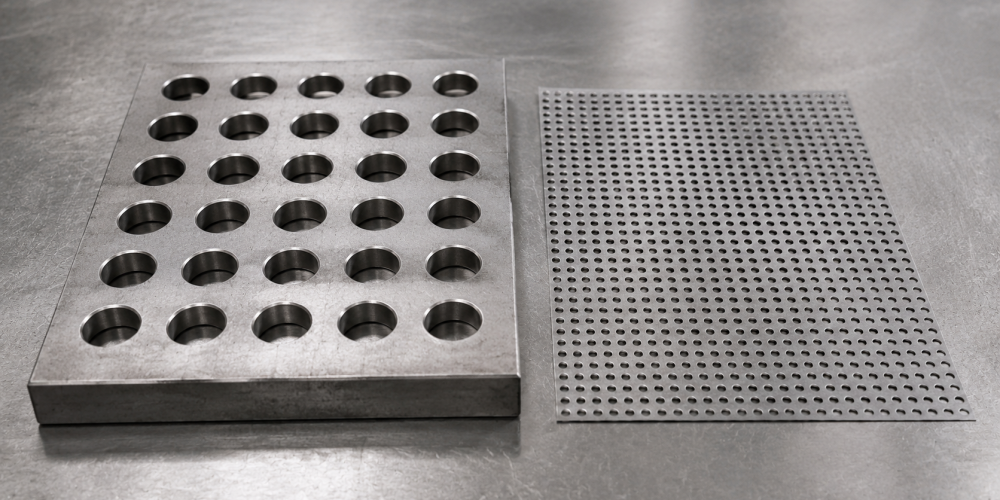
A Perforated Metal Plate is designed for heavy-duty environments where strength, impact resistance, and long service life are essential. Its thicker construction allows it to withstand mechanical stress without bending or deforming.
A Perforated Sheet, on the other hand, is designed for lighter applications where weight reduction, easy fabrication, and affordability are the main priorities.
Some of the key differences include:
| Feature | Perforated Metal Plate | Perforated Sheet |
|---|---|---|
| Thickness | Thick | Thin |
| Weight | Heavy | Lightweight |
| Strength | High | Moderate |
| Flexibility | Low | High |
| Cost | Higher | More economical |
| Best For | Industrial applications | Decorative and ventilation applications |
| Durability | Excellent | Good |
| Fabrication | More difficult | Easy to cut and bend |
Understanding these differences helps engineers, architects, and manufacturers select the right material for improved safety, performance, and long-term value.
Comparing Perforated Metal and Expanded Metal: A Comprehensive Guide
When Should You Choose a Perforated Metal Plate?
A Heavy Duty Perforated Metal Plate is the preferred choice whenever your project requires exceptional strength and durability.
For example, manufacturing plants often install Industrial Perforated Metal Plate panels around machinery to improve safety while maintaining airflow and visibility. Processing industries use them for filtration systems that must withstand constant pressure and continuous operation.
Construction companies also rely on Perforated Metal Plate Applications such as stair treads, safety barriers, bridge walkways, equipment platforms, and protective screens because these products offer reliable structural performance even in demanding environments.
Another common application is Machine Guard Perforated Plate installations. These guards help protect workers from moving machinery while allowing operators to monitor equipment without removing protective barriers.
Outdoor projects also benefit from thicker perforated plates. When manufactured from Galvanized Perforated Plate or Stainless Steel Perforated Plate, they resist corrosion, withstand changing weather conditions, and require minimal maintenance over many years.
If your project involves heavy loads, frequent impact, industrial machinery, or demanding operating conditions, investing in a high-quality Perforated Metal Plate is usually the safest and most cost-effective long-term solution.
Best Materials for a Perforated Metal Plate
Choosing the right material is just as important as choosing the right thickness. Each material offers unique advantages depending on where and how the Perforated Metal Plate will be used.
Stainless Steel Perforated Plate
A Stainless Steel Perforated Plate is the preferred option for environments exposed to moisture, chemicals, or high temperatures. It offers excellent corrosion resistance, making it suitable for food processing, pharmaceutical plants, water treatment facilities, and marine applications.
Benefits include:
- Excellent rust resistance
- Long service life
- Easy to clean and maintain
- Suitable for indoor and outdoor applications
Mild Steel Perforated Plate
A Mild Steel Perforated Plate is one of the most commonly used materials because it provides excellent strength at an affordable price. It is widely used in manufacturing industries, fabrication workshops, machinery guards, and industrial structures.
Benefits include:
- High strength
- Cost-effective
- Easy to weld and fabricate
- Suitable for heavy-duty applications
Galvanized Perforated Plate
A Galvanized Perforated Plate features a protective zinc coating that helps prevent rust. It is commonly used in outdoor environments where exposure to rain and humidity is a concern.
Benefits include:
- Improved corrosion resistance
- Longer lifespan than untreated steel
- Low maintenance
- Ideal for outdoor installations
Aluminium Perforated Plate
Aluminium is lightweight and naturally resistant to corrosion. It is commonly selected for decorative panels, false ceilings, partitions, and architectural projects where reducing weight is important.
Benefits include:
- Lightweight
- Easy to fabricate
- Attractive appearance
- Good corrosion resistance
Choosing the Right Thickness for a Perforated Metal Plate
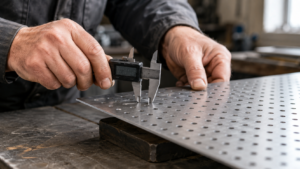
One of the biggest mistakes buyers make is selecting the wrong thickness. A plate that is too thin may bend under pressure, while an unnecessarily thick plate can increase project costs.
Although the exact thickness depends on your application, the following guide provides a useful starting point.
| Application | Recommended Thickness |
|---|---|
| Decorative panels | 0.8 mm to 1.5 mm |
| Ventilation panels | 1 mm to 2 mm |
| Ceiling panels | 1 mm to 2 mm |
| Architectural screens | 2 mm to 3 mm |
| Machine guards | 3 mm to 5 mm |
| Walkways and platforms | 4 mm to 6 mm |
| Heavy industrial equipment | 6 mm and above |
Consulting an experienced Perforated Plate Supplier can help you select the correct thickness based on load requirements, safety standards, and operating conditions.
Common Perforated Metal Plate Applications
A Perforated Metal Plate is used across a wide range of industries because it combines strength with functionality.
Some of the most common Perforated Metal Plate Applications include:
Industrial Machinery
Factories use Machine Guard Perforated Plate panels to improve workplace safety while allowing visibility and ventilation around moving equipment.
Filtration Systems
Water treatment plants, chemical processing units, and industrial filtration systems use Perforated Metal Products for separating materials, filtering particles, and supporting filter media.
Walkways and Stair Treads
Perforated plates provide slip resistance while allowing water, oil, and dirt to drain through the surface. This makes them suitable for industrial walkways and platforms.
Ventilation Systems
Industrial buildings often install Perforated Metal Plate panels in ventilation systems to improve airflow while protecting equipment from debris.
Agricultural Equipment
Agricultural machinery uses perforated plates for grain cleaning, screening, drying systems, and processing equipment.
Mining Industry
Mining operations require durable Heavy Duty Perforated Metal Plate products that can withstand continuous vibration, impact, and abrasive materials.
Architectural Perforated Metal Applications
The construction industry increasingly uses Architectural Perforated Metal because it combines modern aesthetics with practical performance.
Popular applications include:
- Building facades
- Decorative wall panels
- Balcony railings
- Sunshade screens
- Parking structures
- Privacy screens
- Interior partitions
- False ceilings
Architects often select customized hole patterns to improve natural ventilation while creating visually appealing designs.
How to Choose the Right Perforated Metal Plate
Before purchasing, consider these important factors:
1. Understand Your Application
Will the plate support heavy loads, improve airflow, or provide a decorative finish? The application determines the material, thickness, and hole pattern.
2. Select the Right Material
Choose Stainless Steel Perforated Plate for corrosion resistance, Mild Steel Perforated Plate for strength and affordability, or Galvanized Perforated Plate for outdoor use.
3. Choose the Correct Hole Pattern
Round, square, slotted, and hexagonal perforations each offer different levels of airflow, strength, and visual appeal.
4. Consider Plate Thickness
Selecting the appropriate thickness improves safety, durability, and long-term performance.
5. Buy from an Experienced Perforated Plate Supplier
A knowledgeable supplier can recommend the best material, perforation pattern, and thickness based on your project requirements, helping you avoid costly mistakes.
Common Mistakes to Avoid
Many buyers focus only on price, which can lead to performance issues later. Avoid these common mistakes:
- Choosing a Perforated Sheet when a Heavy Duty Perforated Metal Plate is required.
- Ignoring environmental conditions such as moisture or chemical exposure.
- Selecting the wrong hole size or pattern.
- Using inadequate plate thickness for structural applications.
- Purchasing from suppliers who cannot provide consistent quality or customization.
Taking the time to evaluate your application before purchasing can improve safety, reduce maintenance, and extend the lifespan of your Perforated Metal Products.
Conclusion
Choosing between a Perforated Metal Plate and a Perforated Sheet depends on your project’s specific requirements. If your application demands high strength, durability, and reliable performance in demanding environments, a Perforated Metal Plate is the better choice. For projects that prioritize lightweight construction, flexibility, and cost efficiency, a Perforated Sheet offers an excellent solution.
Understanding factors such as material type, plate thickness, hole pattern, and intended application will help you select the right product and improve the long-term performance of your project. Whether you’re working on industrial machinery, architectural facades, filtration systems, or ventilation panels, choosing the correct perforated metal product can reduce maintenance costs and increase operational efficiency.
Why Choose Sudharsun Traders?
If you’re looking for a trusted Perforated Plate Supplier in Coimbatore, Sudharsun Traders offers a wide range of Perforated Metal Products for industrial, commercial, and architectural applications. We supply Stainless Steel Perforated Plates, Mild Steel Perforated Plates, Galvanized Perforated Plates, and custom perforated solutions in various thicknesses, hole patterns, and sizes to meet your exact project requirements.
Our experienced team can help you choose the right material, perforation pattern, and specifications for improved performance and long-term durability. Whether you need a single custom plate or bulk industrial supply, we are committed to delivering quality products, competitive pricing, and reliable service.
Contact Sudharsun Traders today to discuss your project requirements and find the right perforated metal solution for your business.