Perforated Mesh vs Wire Mesh – Which One Should You Use?
Perforated mesh vs wire mesh is a common comparison when choosing materials for screening, filtration, ventilation and other industrial applications. Although both materials are used for similar purposes, they differ in manufacturing, strength, flexibility, open area and structure. Perforated mesh is made by punching holes into a solid metal sheet, while wire mesh is made by weaving or welding individual wires.
So, which one should you use? The right choice depends on your application’s requirements, including load-bearing capacity, airflow, filtration, durability and flexibility. In this guide, we compare perforated mesh and wire mesh, explain their key differences and applications, and help you choose the right option for your project.
Key Takeaways
- Understand the main difference between perforated mesh and wire mesh.
- Compare their strength, flexibility and open area.
- Learn where perforated mesh works better than wire mesh.
- Understand common applications for both materials.
- Choose the right option based on your project’s requirements.
Perforated Mesh vs Wire Mesh – Key Differences
| Feature | Perforated Mesh | Wire Mesh |
|---|---|---|
| Manufacturing | Holes punched into a metal sheet | Wires woven or welded together |
| Structure | Rigid and flat | Flexible or semi-rigid |
| Opening | Custom hole shapes and sizes | Mesh openings based on wire diameter and spacing |
| Strength | Good structural rigidity | Depends on wire diameter and construction |
| Filtration | Suitable for screening and controlled openings | Suitable for fine filtration and sieving |
| Flexibility | Lower | Higher |
| Common Uses | Guards, screens, panels and facades | Filtration, sieving, fencing and screening |
What Is Perforated Mesh?
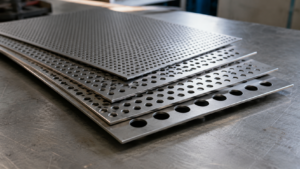
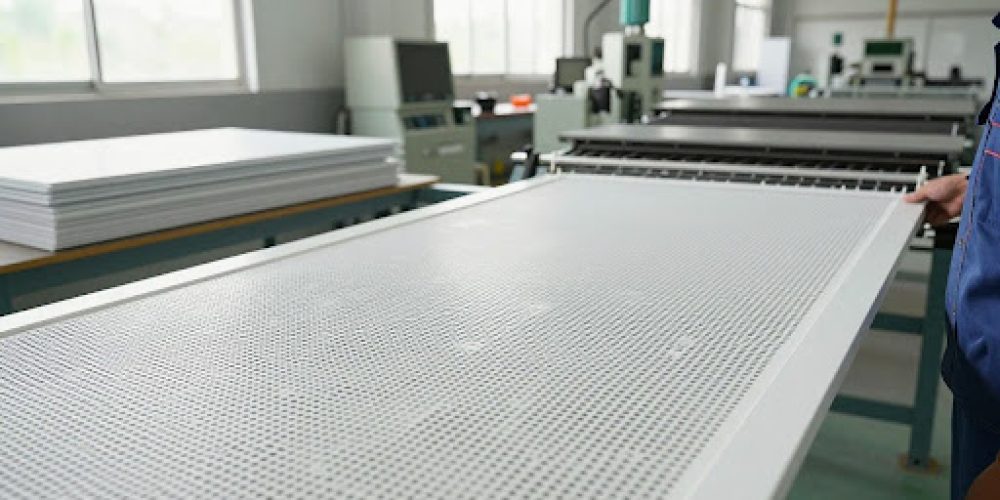
Perforated mesh is a metal sheet with regularly spaced holes created through punching or stamping. It can be manufactured with different hole shapes, sizes, patterns and open-area percentages. Because the sheet remains a single piece of metal, it provides good rigidity and a flat surface. Perforated mesh is commonly used for screening, machine guards, ventilation panels, architectural facades and industrial applications.
What Is Wire Mesh?
Wire mesh is made by arranging individual metal wires through weaving or welding. Woven wire mesh is created by interlacing wires, while welded wire mesh is joined at the wire intersections. Depending on the wire diameter and opening size, wire mesh can provide flexibility, high open area and precise filtration. It is commonly used for screening, sieving, filtration, fencing and industrial separation.
How Perforated Mesh and Wire Mesh Are Made
How Perforated Mesh Is Made
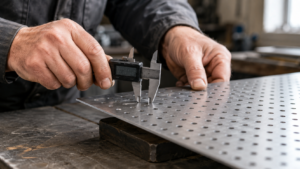
Perforated mesh is manufactured by punching or stamping holes into a solid metal sheet. The hole shape, size, spacing and pattern can be customized according to the application. Common patterns include round, square and slotted holes. The sheet thickness and open area also influence its strength, airflow and screening performance.
Hole Patterns and Open Area
The hole pattern and open area are important factors when selecting perforated mesh. A higher open area can allow more air or liquid to pass through, while a lower open area can provide greater screening and structural support. The right balance depends on the application’s airflow, filtration and strength requirements.
How Wire Mesh Is Made
Wire mesh is produced by weaving or welding individual metal wires. Woven wire mesh uses wires that pass over and under one another, while welded wire mesh is joined at the intersections. Wire diameter, mesh count and opening size determine the mesh’s strength, flexibility and filtration performance.
Woven vs Welded Wire Mesh
Woven wire mesh is commonly selected when flexibility and fine filtration are important. Welded wire mesh provides a more rigid structure and is often used where dimensional stability and strength are required. The choice depends on the load, opening size and application.
| Feature | Perforated Mesh | Wire Mesh |
|---|---|---|
| Manufacturing | Punching or stamping | Weaving or welding |
| Base Material | Solid metal sheet | Individual metal wires |
| Structure | Rigid and flat | Flexible to rigid |
| Opening Type | Holes in a sheet | Mesh openings |
| Customization | Hole size, shape and pattern | Wire diameter and mesh opening |
| Typical Applications | Screens, guards, panels and facades | Filtration, sieving, fencing and screening |
Performance and Durability – Perforated Mesh vs Wire Mesh
Strength and Load-Bearing Capacity
The strength of perforated mesh and wire mesh depends on factors such as material type, thickness, wire diameter, hole or opening size and overall design. Perforated mesh is made from a continuous metal sheet, which gives it good rigidity and structural stability. This makes it suitable for applications where a flat, self-supporting surface is required.
Wire mesh can provide good strength while offering greater flexibility. Welded wire mesh is generally more rigid than woven wire mesh, while woven mesh can be useful where flexibility and fine openings are important. The right option should be selected based on the expected load, working environment and application requirements.
Open Area and Airflow Efficiency
Open area refers to the percentage of a mesh or perforated sheet that is made up of openings. It affects how easily air, gas or liquid can pass through the material.
Perforated mesh allows manufacturers to control the hole size, shape, spacing and open-area percentage. This makes it useful for ventilation, screening and applications where controlled airflow is required.
For wire mesh applications, open area depends on factors such as wire diameter and mesh opening. You can use the wire mesh calculator to check mesh-to-micron conversion and open-area values.
Corrosion Resistance in Different Environments
Corrosion resistance depends mainly on the material, coating and environment in which the mesh is used. Both perforated mesh and wire mesh can be manufactured from corrosion-resistant materials such as stainless steel or supplied with protective coatings.
For applications exposed to moisture, chemicals or outdoor conditions, material selection is especially important. Stainless steel grades such as 304 and 316 are commonly considered for environments where corrosion resistance is important, while galvanized steel can provide a more economical option for many general applications.
Stainless Steel vs Galvanized Steel
Choosing the right alloy or coating is crucial for lasting durability. Stainless steel protects best against chemicals, while galvanized steel is cheaper for outdoor use.
| Material | Corrosion Resistance | Common Applications | Cost Consideration |
|---|---|---|---|
| Stainless Steel 304/316 | High | Food, chemical and industrial applications | Higher |
| Galvanized Steel | Good | Construction and general outdoor use | Moderate |
| Carbon Steel | Lower without protective coating | Indoor/general structural applications | Lower |
Applications of Perforated Mesh vs Wire Mesh
Applications of Perforated Mesh
Perforated mesh is commonly used in applications where controlled openings, rigidity and a flat metal surface are required. Its hole size, shape, pattern and open area can be customized according to the project requirements.
Common perforated mesh applications include:
- Machine guards and safety screens
- Ventilation and air intake panels
- Architectural facades and decorative panels
- Industrial screening
- Equipment covers and enclosures
- Acoustic and sound-control panels
- Walkways and platforms, depending on the material and design
Applications of Wire Mesh
Wire mesh is suitable for applications that require filtration, sieving, screening, flexibility or a high percentage of open area. The right type depends on the wire diameter, opening size, mesh count, material and manufacturing method.
For precision testing and particle classification, perforated-plate sieves are covered by ASTM E323, which specifies perforated plates with round or square apertures.
Common wire mesh applications include:
- Industrial filtration
- Sieving and particle separation
- Food processing
- Chemical and pharmaceutical processing
- Screening and separation
- Fencing and protective barriers
- Air and liquid filtration
- General industrial applications
Perforated Mesh vs Wire Mesh for Different Applications
The right choice between perforated mesh and wire mesh depends on the performance requirements of your application.
| Requirement | More Suitable Option | Why |
|---|---|---|
| Rigid panels and guards | Perforated Mesh | Provides a flat and rigid structure |
| Fine filtration | Wire Mesh | Can provide small and precise openings |
| Controlled hole patterns | Perforated Mesh | Hole size, shape and spacing can be customized |
| Flexible screening | Wire Mesh | Woven mesh can provide greater flexibility |
| Architectural panels | Perforated Mesh | Offers customizable patterns and finishes |
| Particle separation | Wire Mesh | Suitable for screening and sieving applications |
| Ventilation panels | Perforated Mesh | Allows controlled airflow through designed openings |
How to Choose a Reliable Perforated Mesh and Wire Mesh Supplier
Choosing a reliable supplier is important to ensure consistent material quality, accurate dimensions and suitable specifications for your project. Before placing an order, check the material grade, sheet or wire thickness, opening size, dimensions, finish and availability.
What to Check Before Ordering
- Material: Confirm whether you need stainless steel, galvanized steel, aluminum or another material.
- Thickness or wire diameter: Make sure it suits the required strength and application.
- Hole or opening size: Check the required aperture and open area.
- Dimensions: Confirm sheet size, mesh width and length before ordering.
- Finish: Consider surface finish or protective coating based on the operating environment.
- Quality documentation: For industrial applications, ask about relevant test reports or material certificates where required.
- Customization: If standard sizes don’t meet your requirements, check whether the supplier offers custom sizes or patterns.
Need Help Choosing the Right Mesh?
Choosing between perforated mesh and wire mesh depends on your project’s specific requirements, including strength, open area, filtration, durability and application conditions. If you are unsure which option is suitable, discussing your requirements with an experienced supplier can help you identify the right material and specifications.
Looking for perforated mesh or wire mesh for your project? Contact Sudharsun Traders in Coimbatore to discuss your material requirements, available specifications and suitable options.