Perforated Metal Sheets for Industrial Spaces and Modern Facades
Perforated metal sheets are used in industrial and architectural projects for their combination of strength, functionality and design flexibility. With carefully selected hole patterns and materials, these sheets can support ventilation, light control, screening and modern facade designs.
From manufacturing facilities to commercial buildings, perforated metal sheets offer a range of practical and decorative applications. Choosing the right material, thickness, open area and finish is essential to achieving the required performance and appearance.
In this guide, discover how perforated metal sheets are used in industrial spaces and architectural facades, what to consider when selecting them, and how to plan for installation and maintenance.
Key Takeaways
- Perforated metal sheets can improve natural ventilation and help reduce the need for artificial cooling in industrial spaces.
- Modern architectural facades use perforated metal sheets to create visually appealing and functional building designs.
- The durability of these materials can provide long-term protection and practical performance across various facilities.
- Architects in India are increasingly using perforated metal sheets for their design flexibility and aesthetic versatility.
- Improved light diffusion can create a more comfortable and productive indoor working environment.
Assessing Project Requirements and Material Selection
Every project starts with checking what materials are needed and what it needs to do. Before making a design, managers must think about how perforated metal sheets will work in the project’s environment. This step makes sure the materials are strong and look good.
Determining the Functional Purpose of Perforation
The main purpose of perforation influences the overall design and material selection. It may be used to improve airflow in an industrial facility or provide screening and privacy in a residential space. Understanding the required function from the beginning helps avoid unnecessary design changes later.
Selecting the Right Materials for Indian Climates
India experiences a wide range of weather conditions, from heavy rainfall to high temperatures. Choosing the right metal is important for long-term durability and corrosion resistance. Stainless steel perforated sheets offer good resistance to corrosion, while aluminium perforated sheets are lightweight and suitable for different temperature conditions.
Engineers should consider the local climate when selecting metals for a project. Choosing quality materials can help maintain the desired appearance and performance over time while providing better resistance to changing weather conditions.
Choosing Hole Patterns and Open Area for Better Performance
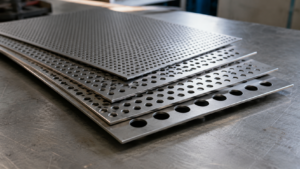
The performance of a perforated metal sheet depends on its hole pattern and open area. These factors influence how much light, air, or sound can pass through the sheet. A higher open area allows more airflow, which can be useful in industrial spaces where ventilation is important.
Smaller holes, on the other hand, can provide greater privacy and help create a more controlled light-diffusion effect. Choosing the right hole pattern and open area helps architects balance the appearance and functional requirements of a project.
Structural Integration of Perforated Metal Sheets in Building Facades
Successful architectural projects require proper structural integration of metal facade systems. When incorporating perforated metal sheets into a building, engineers must consider how the cladding system connects with and works alongside the main structural frame. Proper integration helps maintain the facade’s appearance, stability, and long-term performance.
For facade projects, engineers should consider applicable wind-load requirements when designing the support structure. The relevant IS 875 (Part 3) standard for wind loads can be referred to for applicable design considerations.
Assessing Load-Bearing Capacity for Perforated Metal Facades
Before installation, it is important to determine how much weight the support system can safely handle. An architectural perforated metal facade should distribute its loads appropriately to avoid excessive stress on the building’s structural frame. Structural integrity is especially important for large panels and buildings subject to gravity and earthquake forces.
Engineers assess the loads and structural requirements to check whether the substructure can support the metal panels. Suitable fasteners and strong brackets help secure the facade in place. Careful planning and proper installation can also reduce the risk of future maintenance issues and improve building safety.
Improving Wind Resistance and Thermal Efficiency in Metal Facades
Exterior cladding systems must withstand wind loads, particularly in tall buildings. A properly designed architectural perforated metal facade can provide an effective exterior screening system while allowing airflow through its openings. Its design and support structure should be planned to meet the building’s requirements under different weather conditions.
Thermal efficiency is another important consideration in facade design. Carefully selected perforation patterns and suitable placement can influence solar exposure, shading, and airflow. In India’s warm climate, these design features may help reduce heat gain and improve indoor comfort when integrated with the building’s overall ventilation and cooling strategy.
Working with Perforated Metal Sheet Fabricators in Coimbatore
Choosing the right fabricator is an important part of a successful project. Working with perforated metal sheet suppliers in Coimbatore can help you find custom solutions that match your project’s requirements. Local fabricators may also offer guidance on material selection, hole patterns, and finishes based on the intended application and local conditions.
Experienced fabricators can help ensure that perforated metal sheets are manufactured to the required specifications. Accurate fabrication and proper planning can reduce on-site adjustments and support a smoother installation process, helping achieve the desired appearance and functionality.
Step-by-Step Installation of Perforated Metal Sheets
Installing perforated metal sheets correctly is essential for achieving a professional finish and long-lasting facade performance. Careful planning and proper installation help ensure that the facade looks visually appealing and meets the project’s functional requirements.
Preparing a Strong and Level Framework for Installation
A strong and stable framework is essential for installing perforated metal sheets as cladding. Before installation, ensure that the main frame is properly aligned, straight, and level.
Any unevenness or defects in the framework can affect panel alignment and the overall finish. Using suitable-quality steel or aluminium for the support structure helps provide a stable base for the cladding system.
Measuring and Aligning Perforated Metal Sheets Precisely
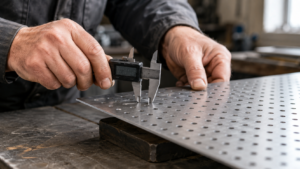
High-quality installation requires accurate measurement and alignment. Using suitable measuring or laser tools can help establish a consistent grid across the building surface.
This grid helps position the panels accurately and maintain consistent spacing throughout the facade. Careful measurements can reduce installation errors and help achieve a clean, uniform appearance for the perforated metal facade.
Using Corrosion-Resistant Fasteners for Perforated Metal Sheets
The right fasteners are essential for a secure and durable installation. In India’s varied weather conditions, using corrosion-resistant fasteners helps reduce the risk of rust and damage over time.
Choose suitable stainless steel bolts or compatible rivets to secure perforated metal sheets. Fasteners should be tightened according to the installation specifications to accommodate temperature-related movement without damaging the panels.
Installation Tools and Their Functions
| Tool Type | Primary Function | Importance |
|---|---|---|
| Laser Level | Helps ensure accurate vertical alignment | Critical |
| Torque Wrench | Controls fastener tightening torque | High |
| Measuring Tape | Helps maintain consistent measurements and spacing | High |
| Safety Harness | Helps protect workers during work at height | Essential |
Improving Industrial Spaces with Perforated Metal Sheets
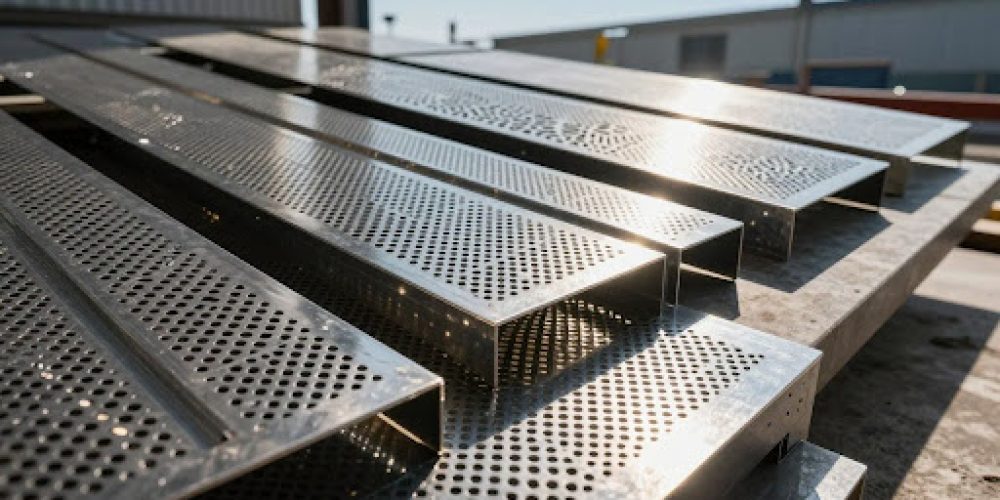
Modern manufacturing facilities need building materials that offer both strength and functionality. Perforated metal sheets can help improve industrial environments by supporting airflow, noise management, and security. When selected and installed appropriately, they can contribute to a more comfortable and functional workspace while supporting daily operations.
Improving Natural Ventilation in Industrial Spaces
Large manufacturing facilities can become hot and poorly ventilated, especially when heavy machinery generates heat and fumes. Perforated metal sheets with suitable hole patterns can support natural cross-ventilation, helping air circulate throughout the workspace.
This approach can be useful in India’s varied climate and may help reduce dependence on mechanical cooling systems when the building design allows sufficient airflow.
- Reduces reliance on mechanical cooling systems.
- Promotes consistent air circulation across the facility.
- Helps disperse heat and fumes generated by machinery.
Enhancing Acoustic Control in Noisy Industrial Environments
Noise from machinery and daily operations can affect comfort, concentration, and workplace communication. Perforated metal sheets can be used with suitable acoustic insulation as part of a noise-management system.
When properly designed and positioned, these panels can help absorb sound and reduce echoes in selected areas. The overall result depends on the insulation material, panel design, and installation.
Effective acoustic management can support a more comfortable and focused industrial workspace.
Using Perforated Metal Sheets for Security and Privacy Screening
Industrial facilities need practical security solutions without making every space feel closed off. Perforated metal sheets can be used for screening around selected areas, helping balance visibility, airflow, and privacy.
Depending on the material, thickness, opening size, and support system, perforated panels can form part of a facility’s security design. Their openings can also allow natural light and visibility where required.
Perforated sheets can help screen equipment and storage areas while maintaining a more open appearance. The right pattern and open area allow designers to balance privacy with the facility’s functional needs.
Choosing the Right Finishing Techniques for Perforated Metal Sheets
The durability and appearance of an architectural perforated metal facade depend partly on the surface finish. Selecting a suitable finishing method can help protect the metal from environmental exposure while achieving the desired appearance.
Using Powder Coating for Weather and Surface Protection
Powder coating is a finishing process in which dry powder is applied to a metal surface and cured using heat. It is commonly used to provide a durable finish and a range of colour options.
For industrial and architectural applications, the suitability of powder coating depends on the metal, coating specification, surface preparation, and exposure conditions. These factors should be considered when selecting a finish for moisture, dust, or pollutant exposure.
Using Anodizing for Aluminium Facade Finishes
Anodizing is an electrochemical process that thickens the natural oxide layer on aluminium. It can provide a consistent architectural finish while retaining the metal’s surface character.
Anodized aluminium is used in facade designs where appearance and surface protection are important. The final look and performance depend on the anodizing specification and the conditions in which the panels will be used.
Maintaining Perforated Metal Facades in Coastal Regions
Buildings in coastal areas may experience increased exposure to salt in the air, which can contribute to corrosion. A suitable maintenance schedule helps keep an architectural perforated metal facade clean and allows potential issues to be identified early.
For coastal installations, consider the following maintenance practices:
- Rinse panels with fresh water periodically to remove salt deposits.
- Use a mild, pH-neutral detergent when deeper cleaning is needed, provided it is compatible with the finish.
- Inspect fasteners, joints, and panel surfaces for signs of corrosion or loosening.
- Use protective waxes or sealants only when recommended by the manufacturer.
| Finishing Method | Main Consideration | Typical Application |
|---|---|---|
| Powder Coating | Colour and surface protection | Industrial and architectural panels |
| Anodizing | Aluminium surface finish | Aluminium architectural facades |
| PVDF Coating | Weathering and chemical exposure requirements | Selected exterior facade applications |
The appropriate finish and maintenance frequency should be confirmed with the material and coating manufacturer.
Designing Modern Facades with Perforated Metal Sheets
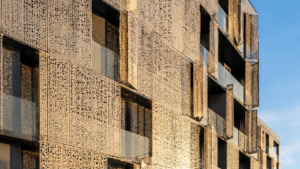
Perforated metal sheets give architects flexibility to create building facades that combine visual interest with practical functions. By adjusting the hole size, spacing, and pattern, designers can influence the appearance, transparency, and light effects of a facade.
Creating Light and Shadow Effects with Perforated Facades
Perforated panels interact with changing daylight to create patterns of light and shadow across building surfaces. The visual effect varies with the hole pattern, panel placement, and direction of sunlight.
- Adds visual depth to flat facade surfaces.
- Can help manage direct sunlight and glare, depending on the design.
- Creates changing light and shadow patterns throughout the day.
Integrating Branding and Custom Patterns into Facade Design
Custom perforation patterns can help give a building a distinctive appearance. Architects may incorporate geometric designs, repeated motifs, or selected branding elements into the facade concept.
The pattern should be planned alongside the panel’s functional requirements, including open area, structural support, and the intended level of visibility.
Balancing Transparency and Privacy in Building Envelopes
Selecting the right open area helps architects balance visibility, privacy, and the overall appearance of a building. The relationship between hole size, spacing, and pattern can change how open or solid a facade looks.
| Design Goal | Perforation Approach | Visual Effect |
|---|---|---|
| Greater Privacy | Lower open area | More enclosed appearance |
| More Light and Visibility | Higher open area | More open appearance |
| Balanced Appearance | Carefully varied pattern | Visual depth and variation |
With suitable planning, perforated metal sheets can help screen selected areas, allow airflow, and contribute to a modern architectural design.
Safety and Building Code Considerations for Perforated Metal Facades in India
Safety should be considered at every stage of a facade project, from material selection and structural design to installation and maintenance. When using perforated metal sheets in buildings, project teams should check the applicable building regulations and technical requirements for the specific project.
Project teams should also review the applicable provisions of the National Building Code of India (NBC) 2016 when planning building facade and safety requirements.
Checking Building Code Requirements for Metal Cladding
The National Building Code of India provides guidance on building safety and related design considerations. Project teams should identify the applicable requirements for the building type, location, and facade system.
Design documentation, material specifications, and relevant test reports can help engineers review the proposed cladding system. Wind loads, structural connections, and the building’s location should be considered during the design process.
Considering Fire Safety and Structural Integrity
Fire safety and structural stability are important considerations for facade systems, particularly in multi-storey buildings. The performance of a complete facade assembly depends on the materials, connections, supporting structure, and installation details.
| Compliance Area | Main Purpose | What to Check |
|---|---|---|
| Fire Safety | Address fire-related risks | Applicable fire-safety requirements for the building |
| Wind Loads | Support facade stability | Relevant wind-load design requirements |
| Corrosion Resistance | Maintain material durability | Material and coating specifications |
| Structural Loads | Support safe installation | Panel, bracket, and frame design calculations |
The project engineer should confirm the applicable codes and standards, including relevant NBC provisions and Indian Standards, before finalizing the design. Requirements can vary according to the building and project conditions.
Choosing the Right Perforated Metal Sheets for Your Project
Perforated metal sheets can support both functional and architectural goals in industrial buildings and modern facades. Choosing suitable materials, hole patterns, finishes, and installation methods helps align the panels with the needs of each project.
For projects in Coimbatore, consider the local climate, intended application, and maintenance requirements when evaluating perforated metal sheets in Coimbatore. Discussing these factors with a qualified supplier or fabricator can help you understand the available material and design options.
Plan your next project by identifying its ventilation, screening, appearance, and structural requirements. Contact Sudharsun Traders to discuss your metal sheet requirements and explore suitable options for your project.