
When it comes to metalwork and fabrication, one of the most common purchasing decisions people struggle with is selecting the right perforated sheets of metal. These sheets come in a wide range of materials, hole sizes, thicknesses, and patterns and picking the wrong one can lead to structural problems, poor aesthetics, or wasted resources. Whether you’re a contractor, designer, or a first-time buyer, knowing what to look for before you buy will make the whole process much smoother.
This guide walks you through five important things to check before making a purchase. These are practical, experience-backed tips that cover everything from the type of metal and hole patterns to edge finish and load-bearing strength. By the end, you’ll feel much more confident walking into a supplier or browsing for perforated metal sheet near me results online.
For a better understanding of how perforated metal is used across different industries, explore this perforated metal applications video on YouTube for additional visual insights.
1. Material Type and Grade of the Perforated Sheets of Metal
The first and most important thing to check is what the sheet is actually made of. Not all metals are the same each has different properties when it comes to strength, corrosion resistance, weight, and cost. Getting this wrong can mean replacing your sheets far sooner than expected, especially in outdoor or high-moisture environments.
Mild Steel vs. Stainless Steel
Mild steel is the most affordable option and works well for indoor applications or projects where rust protection is applied through painting or coating. It’s strong, easy to cut, and widely available. However, if your project is outdoors or exposed to moisture, stainless steel is a far better choice because it naturally resists rust without any additional treatment. Stainless steel is also preferred in food-grade and medical environments where hygiene is critical.
Aluminium Perforated Sheets
Aluminium is lightweight and naturally resistant to corrosion, which makes it popular in the automotive and architectural industries. It’s easier to handle and install compared to steel, especially for large surface areas. One thing to note is that aluminium is softer than steel, so it may not be suitable for applications that require high impact resistance or heavy load support.
Galvanised and Coated Options
Galvanised sheets have a zinc coating applied over mild steel, which gives them a reasonable level of rust protection at a lower cost than stainless. They are commonly used in roofing, fencing, and outdoor structures. Powder-coated options add a layer of colour and protection, which is useful if aesthetics matter alongside durability for example, in a decorative facade or interior design project.
Grade matters for longevity: Always ask the supplier for the specific grade (e.g., SS 304, SS 316) when buying stainless steel. Grade 316 offers better resistance to chloride and is ideal for coastal or marine environments where salt exposure is a concern.
Weight-to-strength ratio: If your structure has weight restrictions, choose aluminium or a thinner steel gauge. Aluminium sheets can be up to three times lighter than steel of the same thickness, making them much easier to install and handle.
2.Hole Size, Shape, and Pitch
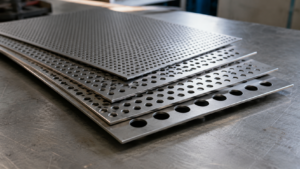
The holes in a perforated sheet are what define its purpose. Hole size, shape, and spacing (called pitch) directly affect how much material passes through — whether that’s air, light, sound, or liquid. Before you buy, think carefully about what your sheet needs to do, because these dimensions cannot be easily changed once the sheet is manufactured.
Round Holes — The Most Common Choice
Round holes are the standard for most industrial and architectural applications. They offer excellent open area percentages, which means more airflow or light passes through. Round perforations are also the most cost-effective to produce because the punching tooling is simple and widely available. If you’re unsure which hole shape to go with, round is usually the safest and most versatile pick.
Square and Slotted Holes
Square holes allow a higher open area for the same pitch compared to round holes, making them useful when maximum airflow or filtration is needed. Slotted holes are elongated and often used in drainage applications, grating, or where directional flow of material is required. Both of these options are slightly more expensive than round punching but offer specific performance advantages depending on your application.
Pitch and Open Area Percentage
Pitch refers to the distance between the centres of adjacent holes. A smaller pitch means more holes per unit area and a higher open area percentage, while a larger pitch gives a sturdier sheet with less open area. If you need the sheet for screening or sieving, a tighter pitch with a specific hole size is critical to ensure accurate particle separation.
Calculate open area before ordering: The open area percentage tells you how much of the sheet surface is actually hole versus metal. A sheet with 40% open area lets through significantly more air or light than one with 20%, which affects ventilation, sound reduction, and visual transparency in your final installation.
Match hole size to function: For noise barriers, smaller, densely packed holes work best. For industrial screens or grain sieves, you need a very precise hole size — even a 1mm difference can let the wrong material pass through or cause blockages.
3. Sheet Thickness and Structural Strength
The thickness of a perforated sheet, often called its gauge, directly determines how much weight and pressure it can bear. If you’re using it as a flooring grating, a heavy-duty screen, or a structural panel, choosing the wrong thickness can be dangerous. Always match the sheet thickness to the expected load and frequency of use.
Understanding Sheet Gauge
In the metal industry, thickness is often described in millimetres rather than gauge numbers, which simplifies things. Sheets range from very thin 0.5mm options used in decorative and lightweight applications all the way up to 6mm or more for structural use. The thicker the sheet, the heavier it is and the more rigid it becomes but it also becomes harder to cut and work with on-site.
Load-Bearing and Safety Considerations
If the sheet will be walked on, driven over, or subjected to repetitive mechanical stress, always consult with the supplier about the appropriate thickness and metal type for your load requirements. A thin aluminium sheet might look the same as a thick steel one from a distance, but they behave very differently under weight. Some suppliers also provide load charts to help you make the right choice for flooring or platform applications.
Balancing Thickness with Open Area
There’s a trade-off between thickness and hole pattern: very thin sheets cannot support large holes without warping or losing structural integrity. If you want a high open area percentage, you may need a thicker sheet to compensate. Discuss this with your fabricator or supplier early in the planning stage so they can recommend the best combination of thickness and perforation pattern for your specific needs.
Structural use needs engineering sign-off: If the perforated sheet is part of a load-bearing structure like a walkway, staircase, or mezzanine platform, it’s important to have the specification reviewed by a structural engineer. An undersized sheet can fail under load, leading to serious safety risks on a job site.
Don’t over-spec for simple applications: For signage, decorative cladding, or light ventilation panels, a 1mm to 2mm sheet is usually more than sufficient. Buying thicker sheets than needed increases your material cost significantly without providing any functional benefit for non-structural uses.
4. Perforated Metal Sheet Design and Pattern Aesthetics
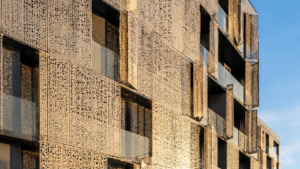
Beyond functionality, the visual appearance of a perforated sheet matters a great deal in architectural, interior design, and branding applications. The perforated metal sheet design you choose will affect how light, shadow, and space are experienced in the finished installation. Designers and architects often spend significant time on this aspect because it shapes the overall feel of a space or product.
Standard vs. Decorative Patterns
Standard patterns staggered rounds, square arrays, or straight-line punching — are the most economical and widely available. They provide a clean, industrial aesthetic that works well in factories, offices, and commercial spaces. Decorative patterns, on the other hand, include artistic shapes like hexagons, diamonds, leaves, or custom logo cutouts that make the sheet a visual centrepiece rather than just a functional panel.
Custom Perforation Designs
If your project calls for something unique, many fabricators offer custom perforation based on digital designs. This is especially popular in retail fitouts, restaurant interiors, and high-end residential projects. You can essentially create any image or text pattern by varying the size and placement of holes across the sheet. The key is to plan this well in advance, as custom tooling takes more time and costs more than standard punching.
How Patterns Affect Light and Shadow
The way light passes through a perforated sheet creates dynamic shadow patterns that change throughout the day. This is a deliberate design tool used by architects to add life and movement to static facades. If you’re designing a sunscreen, cladding panel, or privacy screen, consider how the shadow play will look at different times of day and from different viewing angles it can dramatically enhance the final result.
Visualise before you order: Many suppliers and fabricators now offer digital visualisation tools or physical sample panels that show you exactly how the perforated metal sheet patterns will look once installed. Always request a sample or a digital render before committing to a large order, especially for custom or decorative designs.
Consider the installation environment: A bold hexagonal pattern might look stunning in a modern building lobby but feel out of place in a traditional industrial setting. Always evaluate the aesthetic choice in the context of the surrounding architecture, materials, and the overall project brief to ensure visual coherence.
5. Edge Finish, Tolerances, and Supplier Reliability
The final things to check before purchasing involve the quality of the finished product and the reliability of who you’re buying from. Even if you’ve chosen the right material, thickness, and pattern, poor edge finishing or sloppy tolerances can lead to fitment problems, injuries from sharp edges, or costly rework. Choosing a dependable supplier is just as important as choosing the right specifications.
Edge Finishing Options
Perforated sheets can have raw cut edges, deburred edges, or folded and hemmed edges depending on the application. Raw edges are fine for sheets that will be welded into frames or hidden behind cladding. However, for applications where the sheet edge is exposed such as a visible panel, walkway guard, or decorative screen a deburred or hemmed edge is essential to prevent injury and improve appearance. Always specify the edge finish you need when placing your order.
Dimensional Accuracy and Tolerances
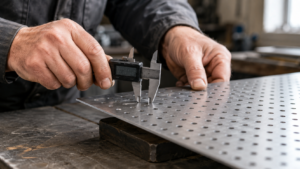
When multiple sheets need to fit together or slot into a pre-built frame, dimensional accuracy is critical. Ask your supplier for the tolerances they work to this means how close the actual sheet dimensions are to the specified measurements. A tolerance of ±1mm might be acceptable for rough industrial use, but for architectural cladding or precision equipment, you may need tighter tolerances of ±0.2mm or better. Getting this wrong can mean sheets that simply don’t fit the installation.
Choosing a Trustworthy Supplier
Not all suppliers offer the same quality, lead times, or service levels. Before committing to a large order, check if the supplier has experience in your industry, provides mill certificates for the metal grade, and offers samples or cut-to-size services. If you’ve been searching for a perforated metal sheet near me, make sure to also ask about minimum order quantities, delivery timelines, and whether they can handle custom specifications. These details make a significant difference in project planning.
Request mill test certificates: A reputable supplier should be able to provide documentation proving the metal grade and quality of the sheets they supply. This is particularly important for stainless steel and aluminium, where the specific alloy composition affects performance in corrosive or high-temperature environments.
Check reviews and past projects: Ask your potential supplier for references or examples of past projects similar to yours. A supplier who has consistently delivered quality work for construction, manufacturing, or architectural clients is far more likely to meet your expectations than one with no track record in your specific industry.
Buying perforated metal sheets doesn’t have to be complicated. Focus on five things: the right material, the correct hole size and pitch, appropriate thickness, a design that suits your project, and a supplier you can trust. When you get these five things right, the rest of the project falls into place much more smoothly. Take the time to get samples, ask questions, and plan ahead — it’s always worth it. Make your next purchase .Contact Sudharsun Traders is your dependable source for quality perforated metal solutions, ready to guide you at every step.