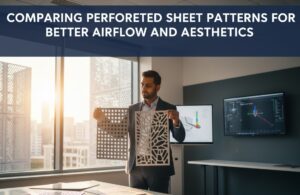

The Art and Science of Pattern Selection
Selecting the right pattern for your perforated sheet is a decision that balances engineering performance with visual design. Whether you are outfitting a high-traffic industrial facility or creating a modern commercial facade, the arrangement and shape of the perforations play a vital role in both operational efficiency and aesthetic appeal. Business owners in Coimbatore are increasingly recognizing that these panels are more than just raw material; they are strategic assets that dictate how light, air, and sound move through a building.
The technical requirement for airflow often intersects with the need for a polished, modern look. It must be selected based on specific load-bearing needs, local climate factors, and the desired visual impact for your company’s brand image. Understanding the relationship between hole density and structural integrity allows you to make informed decisions that avoid common design pitfalls while ensuring your space remains both functional and visually impressive.
This guide is designed to help professionals and business owners navigate the vast options available from trusted dealers in Coimbatore. By exploring the intersection of industrial airflow dynamics and contemporary design trends, you will gain the knowledge necessary to select the ideal configuration for your next project. We aim to clarify the technical specifications that differentiate high-quality materials, ensuring you invest in solutions that offer long-term value, peak ventilation efficiency, and lasting architectural beauty.
2. Understanding Open Area and Airflow Dynamics
The performance of any perforated sheet material is largely determined by its open area percentage. This value indicates how much of the panel is empty space versus solid metal, directly dictating how much air, light, or sound can pass through. Achieving the correct ratio is crucial for systems that rely on consistent ventilation or cooling, such as HVAC units or industrial enclosures.
- Calculating Open Area: Understand the ratio of hole size to the pitch—the distance between hole centers to determine the total open percentage required for your specific airflow needs.
- Impact on Ventilation: A higher open area percentage facilitates better air movement, which is essential for preventing heat buildup in mechanical rooms or industrial zones.
- Performance Balancing: Learn how to balance the need for high ventilation with the structural requirement for a solid surface, ensuring your panels do not buckle under pressure.
3. Comparing Standard Hole Geometries
The geometry of the holes whether round, square, or slotted is more than a stylistic choice. Each shape offers distinct mechanical benefits that can influence the longevity of your installation. While round holes are the industry standard for general versatility, square and slotted options provide unique advantages for specific airflow or structural requirements.
- Circular Patterns for Strength: Round holes are the most cost-effective and provide the most uniform distribution of stress, making them ideal for heavy-duty industrial applications.
- Square Holes for Maximum Airflow: These patterns offer a higher open area and a modern, geometric aesthetic that is favored in contemporary commercial architecture.
- Slotted Patterns for Directional Control: Use slotted configurations when you need to guide the direction of airflow or screen out specific debris sizes in filtration systems.
4. Aesthetic Design Trends for Commercial Facades
Modern businesses in Coimbatore are increasingly using the visual potential of a perforated sheet to elevate their building’s identity. Beyond mere utility, these panels act as an expressive medium, allowing architects to blend corporate branding with functional solar shading and privacy screens. The strategic use of varied hole sizes and arrangements can turn a standard exterior into a memorable landmark that resonates with clients and visitors alike.
- Dynamic Textures: By experimenting with staggered versus straight patterns, designers can create visual depth and rhythm, making static building surfaces appear to have movement.
- Branding Integration: Leading companies are opting for custom-cut motifs, such as logos or abstract brand imagery, which are precision-punched into the metal to create a distinct, long-lasting visual signature.
- Lighting Effects: The architectural trend of using backlit facades behind perforated metal allows buildings to transform at night, with light filtering through the patterns to create a sophisticated, glowing urban presence.
5. Pattern Impact on Acoustic Performance
In large warehouses, open-plan offices, or bustling retail environments, unwanted noise can significantly hinder productivity and customer comfort. A perforated metal sheet serves as a powerful acoustic tool, as the specific pattern of holes directly influences how sound waves are absorbed or diffused. When designed correctly, these panels turn noisy, echoing areas into balanced, professional spaces by breaking up sound reflections before they become disruptive.
- Sound Diffusion Science: The relationship between perforation diameter, hole density, and the depth of the backing space allows these sheets to effectively scatter sound waves, reducing echo and reverberation.
- Integrated Solutions: You can install these panels as part of wall cladding or suspended ceiling systems to achieve acoustic control without needing bulky, non-durable foam or fabric insulation.
- Optimized Patterning: For maximum acoustic benefit, we recommend consultation on hole arrangements that specifically target the noise frequencies prevalent in your unique industrial or commercial setting.
6. Balancing Aesthetics with Structural Integrity
While it is tempting to maximize hole size for superior airflow, structural stability must remain a priority for any lasting installation. Every cut made into a perforated metal sheet alters the material’s load-bearing capacity, meaning that the pattern design must be carefully calculated to avoid warping, sagging, or premature fatigue. Finding this balance requires a professional understanding of material thickness and the spacing between perforations, known as the bridge.
- Stress Distribution: A well-engineered pattern ensures that structural loads are distributed evenly across the solid areas of the sheet, maintaining the panel’s rigidity even with high-density perforation.
- Custom Engineering: Working closely with experienced perforated sheet manufacturers in Coimbatore ensures that your desired aesthetic pattern is analyzed for structural viability before any metal is cut.
- Panel Durability: Properly planned hole arrangements prevent “oil-canning” or buckling, ensuring your architectural or industrial panels retain their clean, flat appearance for years to come.
7. Material Compatibility for Different Patterns
Choosing the right base material is as important as selecting the perforation pattern itself. The ductility, strength, and corrosion resistance of the metal you select must align with your project’s environment and mechanical demands. When you source materials from reputable perforated sheet dealers in Coimbatore, they can guide you on which metal grade such as stainless steel, aluminum, or mild steel will best support your chosen design without sacrificing long-term durability.
- Ductility and Pattern Clarity: Metals like aluminum and brass are highly ductile, making them perfect for complex, intricate, or highly dense perforation patterns that require precision punching.
- Corrosion Resistance: For outdoor facades or humid industrial environments, stainless steel or galvanized options ensure your chosen pattern remains pristine and free from rust for years.
- Structural Compatibility: Heavier materials like mild steel are excellent for high-load applications where the pattern must balance airflow requirements with the need for a rigid, heavy-duty framework.
8. Custom Patterns vs. Standard Off-the-Shelf Options
Deciding between standard, off-the-shelf patterns and bespoke designs depends on your project’s specific goals regarding functionality and branding. Standard patterns are cost-effective and readily available, making them perfect for general industrial ventilation or standard filtration. However, when your project requires a unique look or specialized airflow performance, custom-designed patterns allow you to achieve exact specifications that off-the-shelf options simply cannot provide.
- Cost-Efficiency of Standards: Choosing standard circular or square hole patterns significantly reduces manufacturing lead times and costs, making them the logical choice for straightforward functional applications.
- Strategic Value of Customization: Bespoke designs allow for unique hole sizes and pitches that can be engineered for specialized acoustic dampening or branded architectural statements.
- Engineering Consultation: Always consult with professional perforated sheet manufacturers in Coimbatore during the design phase to determine if your vision requires a custom solution or if a standard pattern can be adapted to fit your needs.
Transform Your Space Today
If you found this guide helpful and are ready to optimize your facility, remember that the right choice in patterns can transform both your operational efficiency and your brand’s visual identity. Don’t settle for generic solutions when precision-engineered metal can elevate your workspace to the next level of performance and prestige.
Ready to see the difference for yourself? Click the button below to browse our full catalog of patterns, or contact our expert team today to schedule your custom design consultation. Let’s build something extraordinary together.
FAQs
- How do I calculate the airflow requirement for my specific industrial application?
We analyze your machinery’s cooling needs and use standard airflow formulas based on the open area percentage of your chosen pattern to determine the exact requirements. - Which perforation pattern offers the best balance between aesthetics and structural strength?
Round hole patterns are typically the industry standard for balancing high strength with consistent airflow, but custom patterns can be engineered to meet your specific design needs. - Can a perforated metal sheet be powder coated without clogging the small hole patterns?
Yes, our professional coating process is specifically calibrated for perforated materials, ensuring a smooth finish that does not restrict the hole openings. - Are square-hole patterns more expensive to manufacture than round-hole patterns?
Complexity affects cost, and while square holes require different tooling, our efficient CNC processes keep custom designs competitive for businesses. - How does the choice of metal alloy affect the final clarity of the pattern?
More ductile metals like aluminum allow for finer detail and sharper hole edges, while stainless steel provides superior longevity and clean, precise finishes. - Can you help with custom CAD designs if I have a specific pattern in mind?
Absolutely; our engineering team works with your CAD files or conceptual sketches to ensure your custom pattern is both beautiful and structurally sound. - How often should I clean my perforated panels to ensure the airflow remains consistent?
Maintenance depends on your environment, but a periodic inspection and cleaning with compressed air or mild detergent is usually sufficient for most industrial settings. - Are there patterns that are specifically designed to reduce solar glare for offices?
Yes, we offer specialized hole arrangements and densities that effectively diffuse sunlight, significantly reducing glare while maintaining natural interior lighting. - Why is it important to consider the “bridge” size between holes in a perforated sheet?
The bridge is the solid metal remaining between holes; it is critical for maintaining structural rigidity, and we calculate this based on the load your panel must support. - What documentation should I ask for from perforated sheet dealers in Coimbatore?
Always request material test certificates, technical data sheets on open area percentages, and, if applicable, documentation regarding anti-corrosive treatments.